> ## Documentation Index
> Fetch the complete documentation index at: https://help.peliqan.io/llms.txt
> Use this file to discover all available pages before exploring further.
# Power BI
In Peliqan, go to Connections, find the Data Warehouse tile and copy/paste your connection details:
Use these settings in Microsoft Power BI to connect:
* **Connection type**: Postgres (default data warehouse type in Peliqan)
* **Server**:
* [db.eu.peliqan.io](http://db.eu.peliqan.io)
* [db.mydatacloud.com](http://db.mydatacloud.com)
* [db.us.peliqan.io](http://db.us.peliqan.io)
* … (check in your account under Connections > Data warehouse connection)
* **User name & password**: copy / paste from the **Data Warehouse** Connection tile (see above)
* **Database name**: same as the user name
* **SSL**: enabled
# Step by step
In Power BI, click on “Get Data” and then “More” or “Get data from another source”.
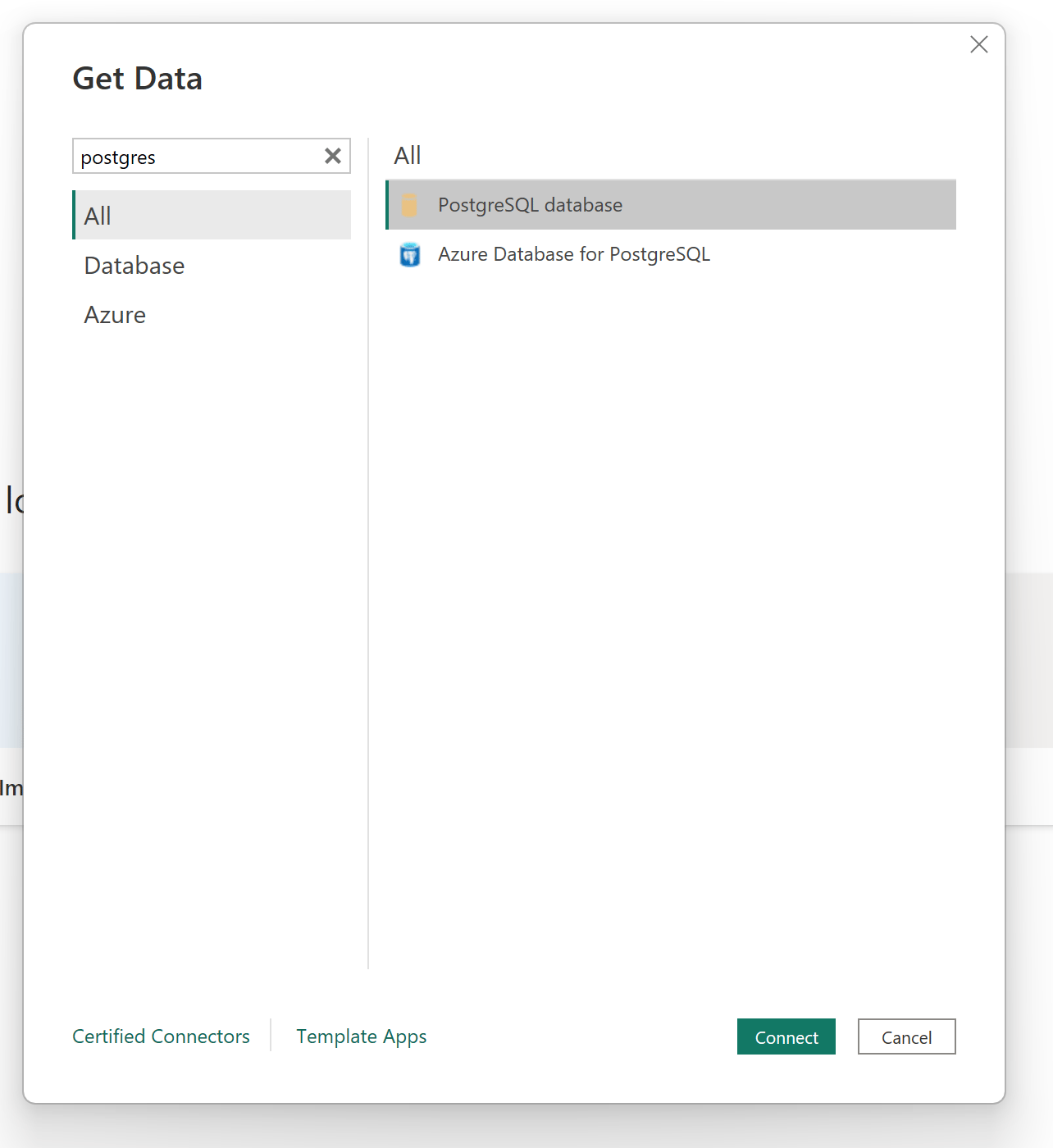
Select PostgreSQL from the list:
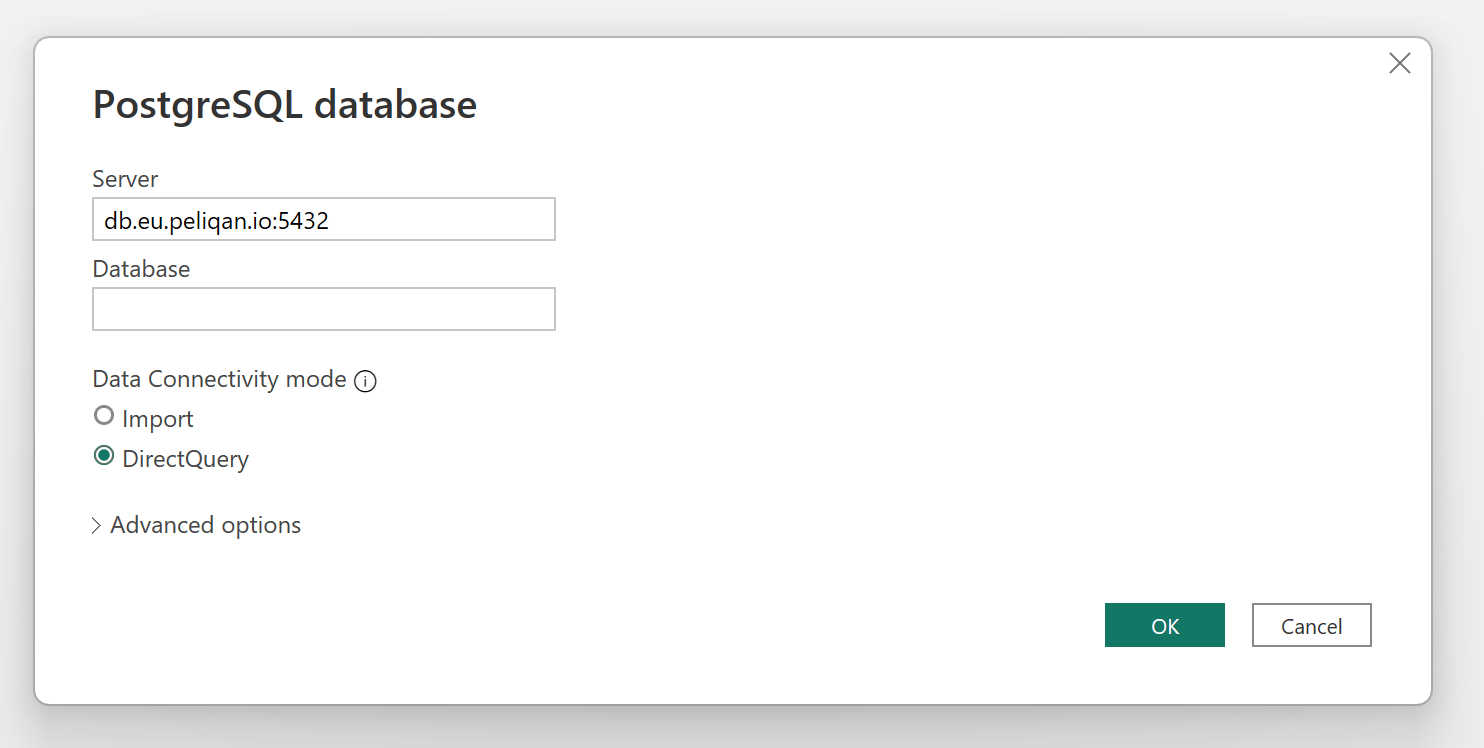
Paste the host name from the Peliqan data warehouse, e.g. `db.eu.peliqan.io` , the database name and click OK:
On the next screen, enter the database name from Peliqan and select “DirectQuery”. Note that the database name is the same as the user name (login). On the next screen, enter the login and password from Peliqan:
\
Select the tables to include in Power BI:
You can now build charts in Power BI:
# Troubleshooting
### Error “Please install Npgsql version 4.0.10.0 or earlier”
A recent Windows update (August/September 2024) might cause issues for Power BI to connect to Postgres. The Peliqan built-in data warehouse runs on Postgres.
You might get the error “Please install Npgsql version 4.0.10.0 or earlier” when doing a Refresh in Power BI Desktop:
In that case, please make sure to install the correct version of **Npgsql** on your Windows computer. **Npgsql** is the Postgres driver used by Power BI.
Download the MSI installer from this URL:
[https://github.com/npgsql/npgsql/releases/tag/v4.0.10](https://github.com/npgsql/npgsql/releases/tag/v4.0.10)
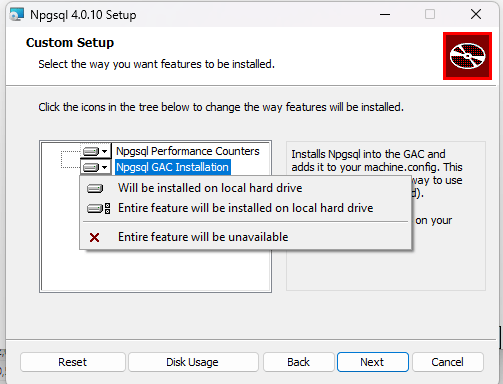
During install, make sure to install in GAC (Windows Global Assembly Cache):
After install, reboot your computer !
Once you have rebooted, the Refresh in Power BI Desktop should work again.
### Error on SSL certificate (encryption)
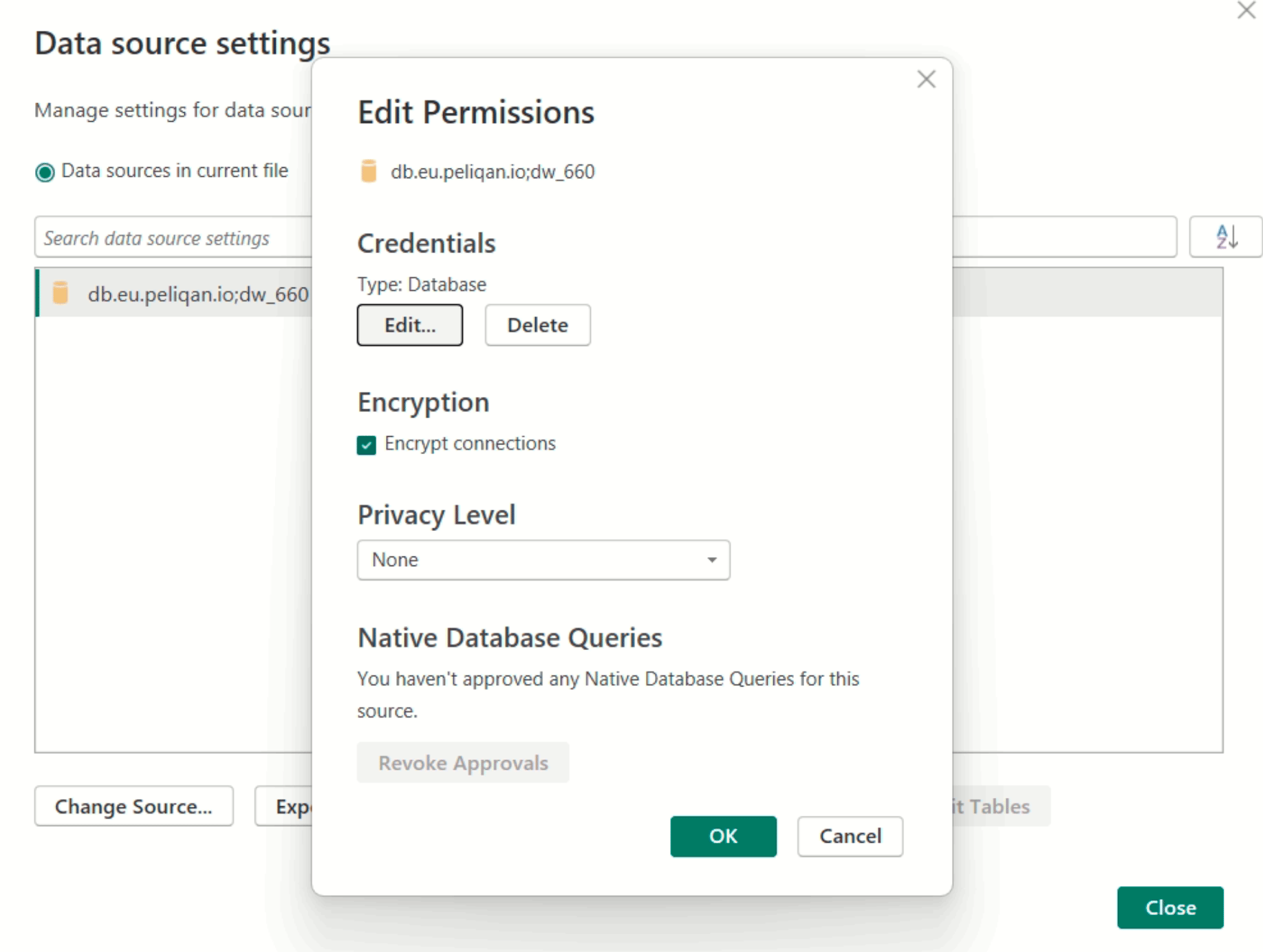
Make sure to set the data source to “Encrypt connections”.
Settings > Data sources > Edit permissions > Check the checkbox “Encrypt connections”.
### Error “The remote certificate is invalid according to the validation procedure”
If you receive the error “The remote certificate is invalid according to the validation procedure”, this is because the root certificate used by the Peliqan data warehouse is not installed on your computer. You can verify this under Root Certificates in Certificate Manager `certmgr`.
Following certificate must be present: `Go Daddy Root Certificate Authority - G2`
Windows will automatically install the certificate when needed, however MDM solutions (Mobile Device Management) might have blocked automatic install of root certificates.
This can be checked in the Windows Registry under: `HKEY_LOCAL_MACHINE\SOFTWARE\Policies\Microsoft\SystemCertificates\AuthRoot`.
Check if there is a DWORD `DisableRootAutoUpdate`. If the value is 1, auto updates are disabled. Change the value to 0 or manually install the certificate.
Download the root certificate for the Peliqan data warehouse:
peliqan\_dwh\_root\_certificate\_godaddy\_g2.pem
Or download `gdroot-g2.crt` from Godaddy: [https://aboutssl.org/go-daddy-root-certificates/](https://aboutssl.org/go-daddy-root-certificates/)
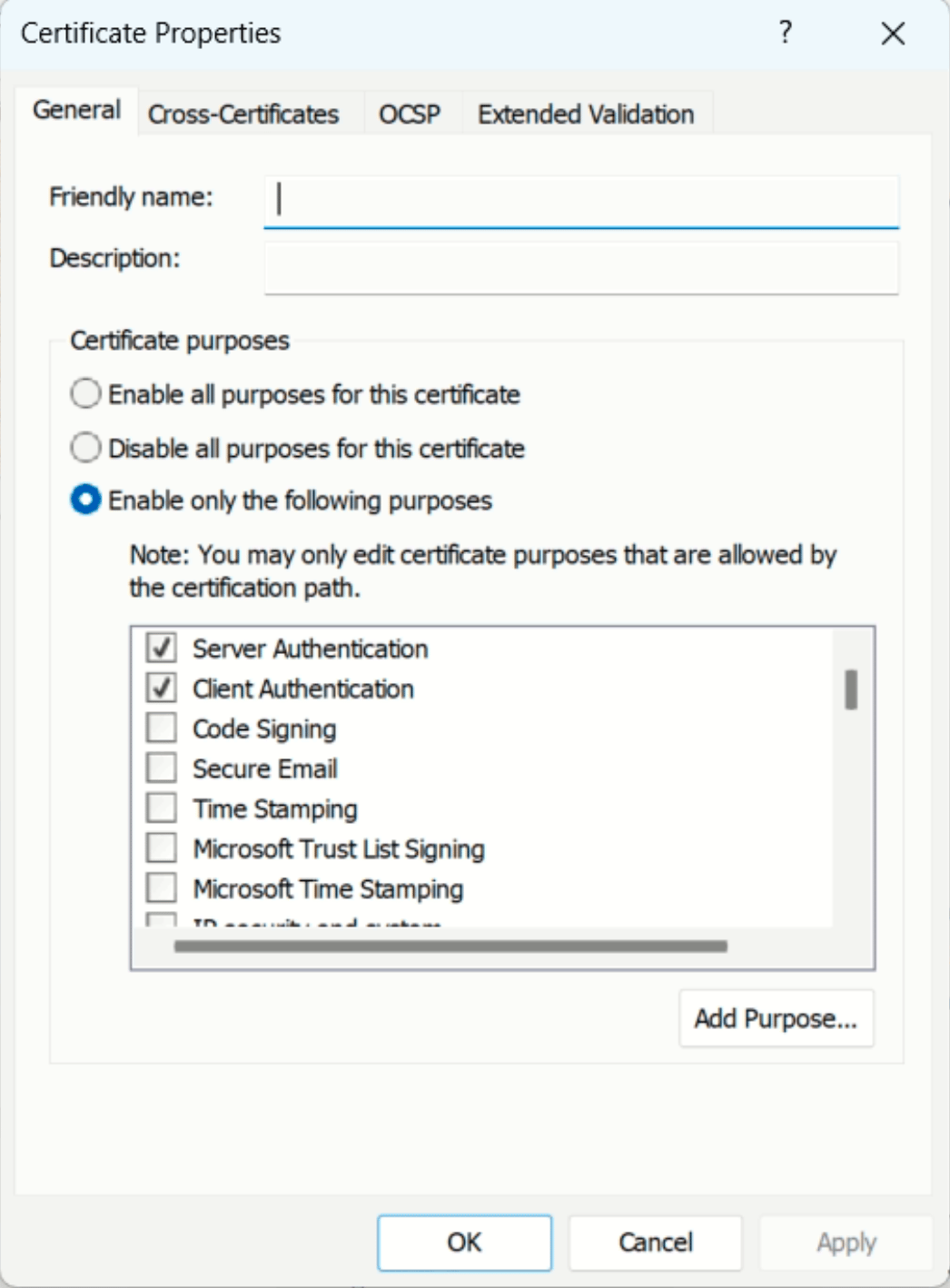
Make sure the “Intended Purpose” for the roort certificate is set to \ (Enable all purposes for this certificate), or that **Server Authentication** is checked. Double click the certificate in Certificate manager > tab Details > button “Edit Properties” > Certificate purposes:
If you don’t have sufficient permissions, contact your IT administrator and ask for the above root certificate to be installed.
This documentation is built and hosted on [Mintlify](https://mintlify.com), a developer documentation platform.
 If you don’t have sufficient permissions, contact your IT administrator and ask for the above root certificate to be installed.
This documentation is built and hosted on [Mintlify](https://mintlify.com), a developer documentation platform.
If you don’t have sufficient permissions, contact your IT administrator and ask for the above root certificate to be installed.
This documentation is built and hosted on [Mintlify](https://mintlify.com), a developer documentation platform.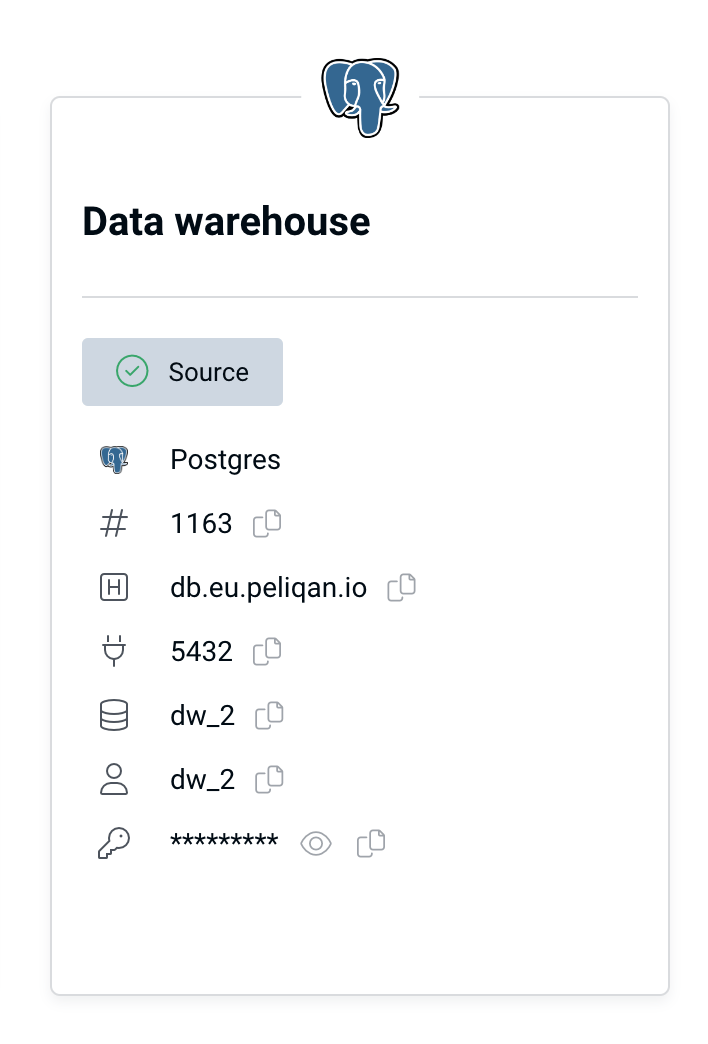 Use these settings in Microsoft Power BI to connect:
* **Connection type**: Postgres (default data warehouse type in Peliqan)
* **Server**:
* [db.eu.peliqan.io](http://db.eu.peliqan.io)
* [db.mydatacloud.com](http://db.mydatacloud.com)
* [db.us.peliqan.io](http://db.us.peliqan.io)
* … (check in your account under Connections > Data warehouse connection)
* **User name & password**: copy / paste from the **Data Warehouse** Connection tile (see above)
* **Database name**: same as the user name
* **SSL**: enabled
# Step by step
In Power BI, click on “Get Data” and then “More” or “Get data from another source”.
Select PostgreSQL from the list:
Use these settings in Microsoft Power BI to connect:
* **Connection type**: Postgres (default data warehouse type in Peliqan)
* **Server**:
* [db.eu.peliqan.io](http://db.eu.peliqan.io)
* [db.mydatacloud.com](http://db.mydatacloud.com)
* [db.us.peliqan.io](http://db.us.peliqan.io)
* … (check in your account under Connections > Data warehouse connection)
* **User name & password**: copy / paste from the **Data Warehouse** Connection tile (see above)
* **Database name**: same as the user name
* **SSL**: enabled
# Step by step
In Power BI, click on “Get Data” and then “More” or “Get data from another source”.
Select PostgreSQL from the list:
 Paste the host name from the Peliqan data warehouse, e.g. `db.eu.peliqan.io` , the database name and click OK:
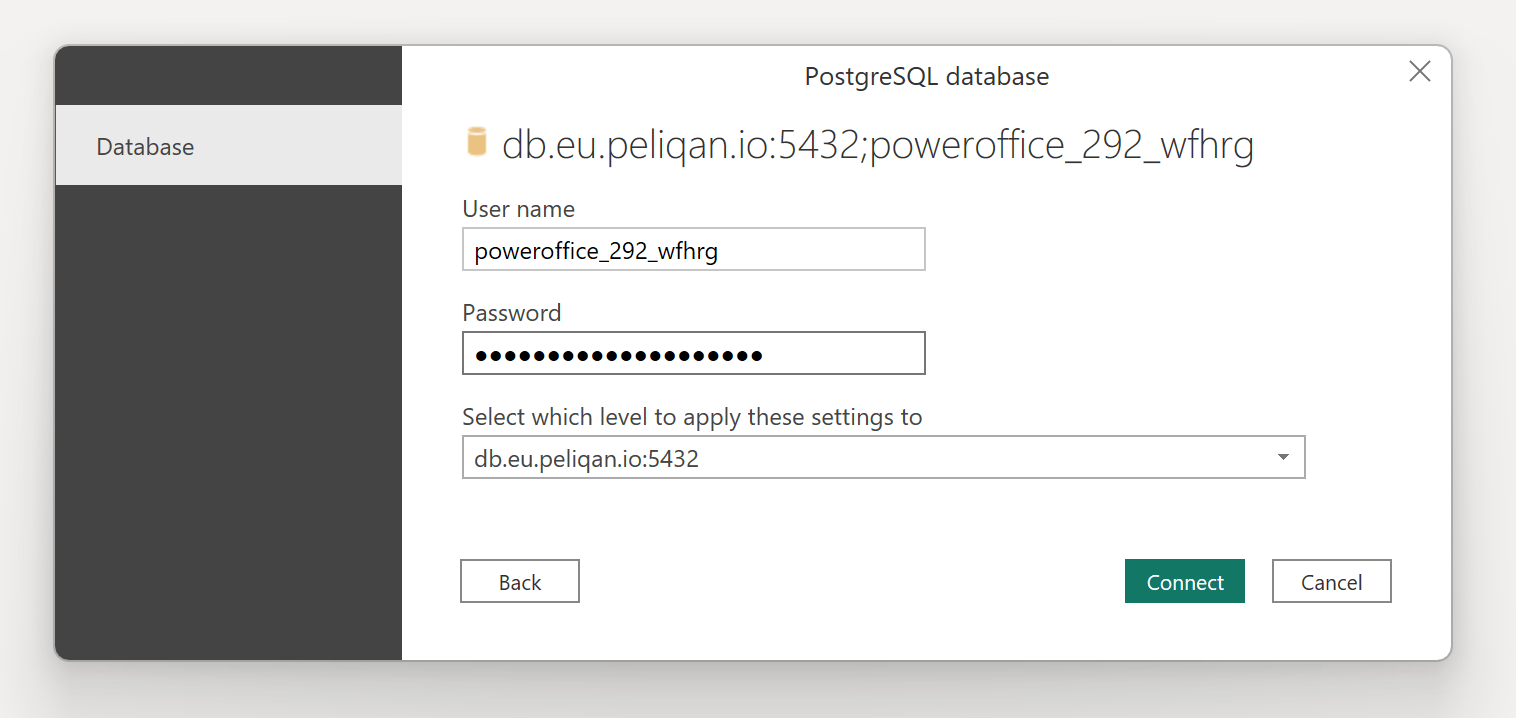
 On the next screen, enter the database name from Peliqan and select “DirectQuery”. Note that the database name is the same as the user name (login). On the next screen, enter the login and password from Peliqan:
 \
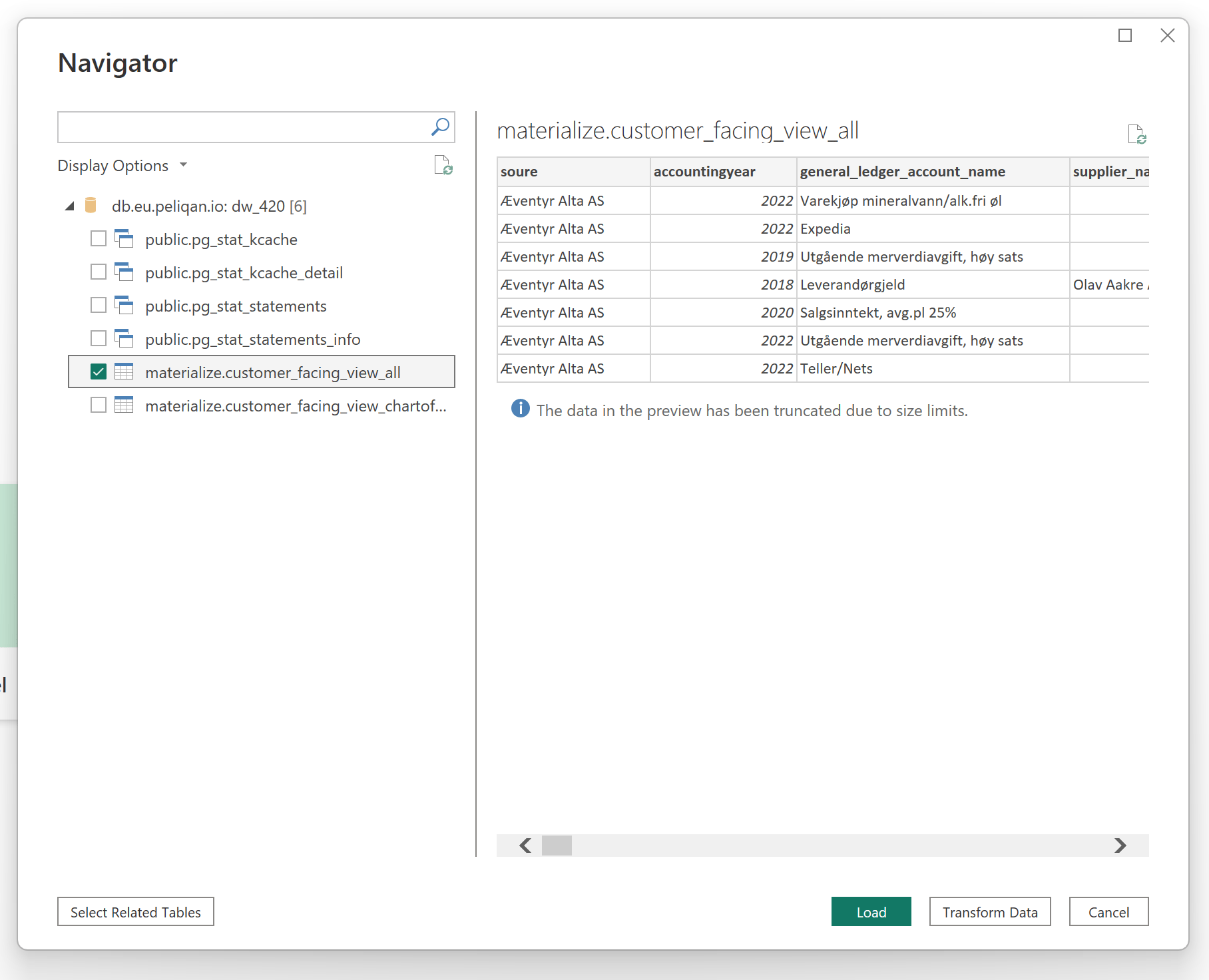
Select the tables to include in Power BI:
\
Select the tables to include in Power BI:
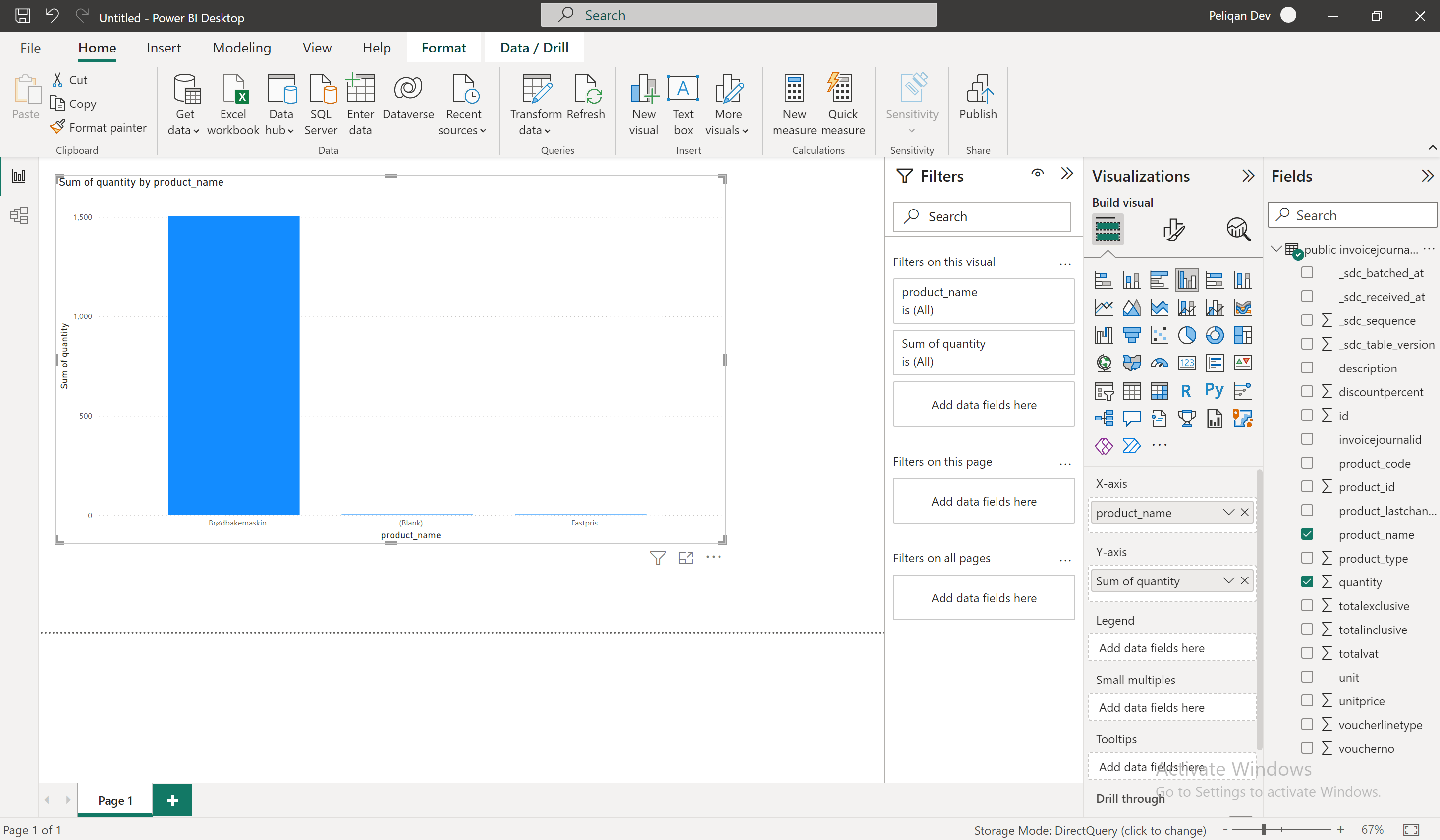
 You can now build charts in Power BI:
 # Troubleshooting
### Error “Please install Npgsql version 4.0.10.0 or earlier”
A recent Windows update (August/September 2024) might cause issues for Power BI to connect to Postgres. The Peliqan built-in data warehouse runs on Postgres.
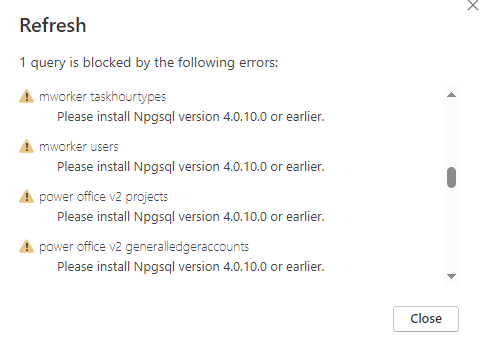
You might get the error “Please install Npgsql version 4.0.10.0 or earlier” when doing a Refresh in Power BI Desktop:
# Troubleshooting
### Error “Please install Npgsql version 4.0.10.0 or earlier”
A recent Windows update (August/September 2024) might cause issues for Power BI to connect to Postgres. The Peliqan built-in data warehouse runs on Postgres.
You might get the error “Please install Npgsql version 4.0.10.0 or earlier” when doing a Refresh in Power BI Desktop:
 In that case, please make sure to install the correct version of **Npgsql** on your Windows computer. **Npgsql** is the Postgres driver used by Power BI.
Download the MSI installer from this URL:
[https://github.com/npgsql/npgsql/releases/tag/v4.0.10](https://github.com/npgsql/npgsql/releases/tag/v4.0.10)
During install, make sure to install in GAC (Windows Global Assembly Cache):
In that case, please make sure to install the correct version of **Npgsql** on your Windows computer. **Npgsql** is the Postgres driver used by Power BI.
Download the MSI installer from this URL:
[https://github.com/npgsql/npgsql/releases/tag/v4.0.10](https://github.com/npgsql/npgsql/releases/tag/v4.0.10)
During install, make sure to install in GAC (Windows Global Assembly Cache):
 After install, reboot your computer !
Once you have rebooted, the Refresh in Power BI Desktop should work again.
### Error on SSL certificate (encryption)
Make sure to set the data source to “Encrypt connections”.
Settings > Data sources > Edit permissions > Check the checkbox “Encrypt connections”.
After install, reboot your computer !
Once you have rebooted, the Refresh in Power BI Desktop should work again.
### Error on SSL certificate (encryption)
Make sure to set the data source to “Encrypt connections”.
Settings > Data sources > Edit permissions > Check the checkbox “Encrypt connections”.
 ### Error “The remote certificate is invalid according to the validation procedure”
If you receive the error “The remote certificate is invalid according to the validation procedure”, this is because the root certificate used by the Peliqan data warehouse is not installed on your computer. You can verify this under Root Certificates in Certificate Manager `certmgr`.
Following certificate must be present: `Go Daddy Root Certificate Authority - G2`
Windows will automatically install the certificate when needed, however MDM solutions (Mobile Device Management) might have blocked automatic install of root certificates.
This can be checked in the Windows Registry under: `HKEY_LOCAL_MACHINE\SOFTWARE\Policies\Microsoft\SystemCertificates\AuthRoot`.
Check if there is a DWORD `DisableRootAutoUpdate`. If the value is 1, auto updates are disabled. Change the value to 0 or manually install the certificate.
Download the root certificate for the Peliqan data warehouse:
peliqan\_dwh\_root\_certificate\_godaddy\_g2.pem
Or download `gdroot-g2.crt` from Godaddy: [https://aboutssl.org/go-daddy-root-certificates/](https://aboutssl.org/go-daddy-root-certificates/)
Make sure the “Intended Purpose” for the roort certificate is set to \
### Error “The remote certificate is invalid according to the validation procedure”
If you receive the error “The remote certificate is invalid according to the validation procedure”, this is because the root certificate used by the Peliqan data warehouse is not installed on your computer. You can verify this under Root Certificates in Certificate Manager `certmgr`.
Following certificate must be present: `Go Daddy Root Certificate Authority - G2`
Windows will automatically install the certificate when needed, however MDM solutions (Mobile Device Management) might have blocked automatic install of root certificates.
This can be checked in the Windows Registry under: `HKEY_LOCAL_MACHINE\SOFTWARE\Policies\Microsoft\SystemCertificates\AuthRoot`.
Check if there is a DWORD `DisableRootAutoUpdate`. If the value is 1, auto updates are disabled. Change the value to 0 or manually install the certificate.
Download the root certificate for the Peliqan data warehouse:
peliqan\_dwh\_root\_certificate\_godaddy\_g2.pem
Or download `gdroot-g2.crt` from Godaddy: [https://aboutssl.org/go-daddy-root-certificates/](https://aboutssl.org/go-daddy-root-certificates/)
Make sure the “Intended Purpose” for the roort certificate is set to \